
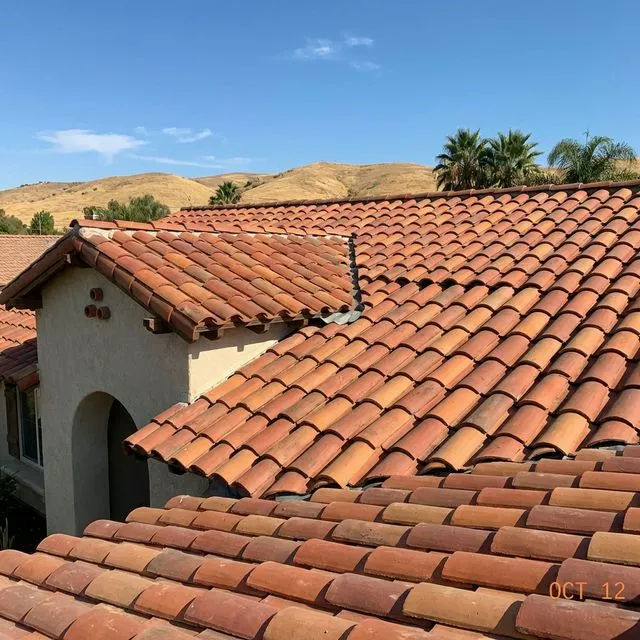
Tile Roof Installation and Repair in Bakersfield, CA

Tile Roof Installation and Repair in Bakersfield, CA

Clay and concrete tile roofing installation and repair for 50+ year service life, superior heat resistance, and lasting curb appeal on Bakersfield residential and light commercial properties.

Tile Roof Installation and Repair Specialists

Bakersfield Expert Roofing offers professional tile roof installation and repair in Bakersfield, CA with over 20 years of experience handling residential and commercial roofing projects.

Tile roofing is the most popular premium option in Bakersfield for good reason — concrete and clay tile resist UV degradation, reflect more solar heat than standard shingles, and can last 50-75 years when the supporting system is built correctly. The key to tile performance is what is underneath: high-temperature rated underlayment that survives the 160°F+ temperatures that build beneath tile on summer days, properly spaced battens that allow drainage, and flashing details that accommodate the thermal expansion tiles experience daily. Our crews specialize in both new tile installation and the repair of existing tile systems where the tiles look fine from the ground but the underlayment beneath has dried out and cracked — the most common hidden failure mode for tile roofs in the San Joaquin Valley.

Clay Tile Installation in Bakersfield, CA

Clay Tile Installation

Traditional S-tile, mission barrel, and flat profile clay tile installed with seismic-rated nose clips and hurricane ties on battens sized for your roof pitch. Clay tile weighs 900-1,200 lbs per square — we verify structural capacity before installation and coordinate engineering if reinforcement is needed.

Tile Roof Installation and Repair Process

STEP 1

Tile System Assessment

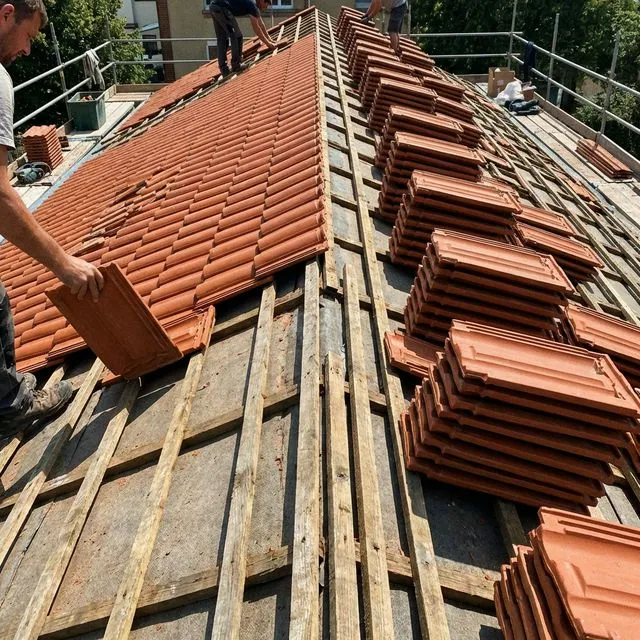
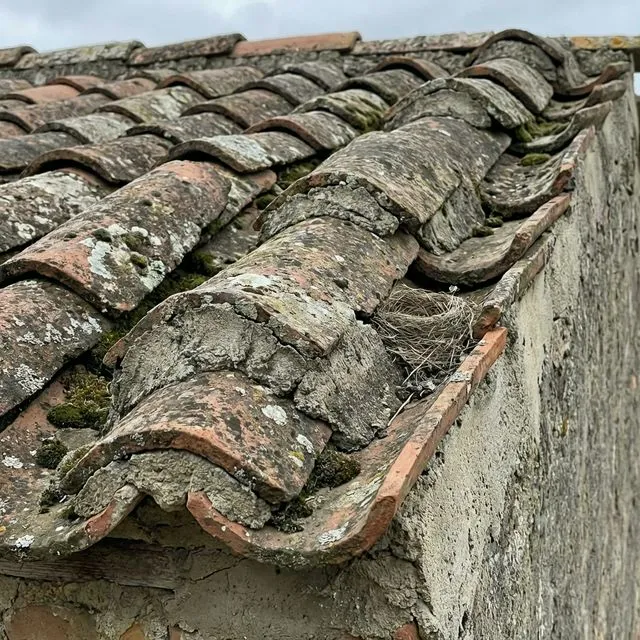
We evaluate visible tile condition, check for displaced or cracked units, and lift sample tiles to inspect the underlayment and batten condition beneath. This hidden layer inspection is critical — most tile roof leaks originate from underlayment failure, not tile damage.
STEP 2

Structural and Load Verification

For new installations, we verify that the roof framing can support tile weight. For repairs involving large section rebuilds, we check that existing framing has not been compromised by moisture damage at leak points.

STEP 3

Underlayment and Flashing Rebuild

High-temperature synthetic underlayment replaces the original felt, new corrosion-resistant battens are installed at correct spacing for the tile profile, and all valley, wall, and penetration flashings are rebuilt with materials rated for the heat environment beneath tile.

STEP 4

Tile Installation and Alignment

Field tiles are set with consistent course lines, proper overlap, and mechanical fastening per California seismic requirements. Ridge, hip, and rake tiles are set in mortar or with dry-ridge systems depending on the architectural style and your preference.

STEP 5

Final Quality Review

We check alignment, drainage channels between tile rows, ridge and hip mortar integrity, and all exposed transition details before cleanup and project handoff.

Tile Roof Installation and Repair process in Bakersfield, CA
Concrete Tile Installation in Bakersfield, CA

Concrete Tile Installation

Concrete tile offers similar longevity to clay at a lower cost, with broader color and profile options including flat, low-profile, and high-profile designs. Concrete tile is the most common new tile choice in Bakersfield subdivisions due to its combination of fire resistance, heat performance, and value.

Tile Roof Repair

Individual cracked, broken, or wind-displaced tile replacement plus the critical underlayment and flashing work beneath. On tile roofs over 15-20 years old, the tiles themselves are often still serviceable but the felt underlayment has deteriorated from heat exposure — we address the hidden layer, not just the visible surface.

Our Tile Roof Installation and Repair Advantages

  • Our tile crews are trained specifically in tile system installation and repair — tile work requires different skills, tools, and material knowledge than shingle or flat roof work.

  • We address the hidden underlayment layer that causes most tile roof failures, not just the visible tile surface that homeowners can see from the ground.

  • Structural load calculations are completed before any tile installation to prevent framing stress, sagging, or code violations.

  • Material recommendations are matched to your roof pitch, architectural style, HOA requirements, and budget — with honest comparison between clay and concrete options.

  • Repair scoping includes inspection of adjacent areas so we catch developing underlayment failures before they cause interior leaks.

Tile Roof Installation and Repair FAQs

How long does a tile roof typically last?

The tiles themselves can last 50-75 years or longer. However, the underlayment beneath the tiles typically needs replacement every 20-30 years, especially in Bakersfield where extreme heat accelerates felt deterioration. A tile roof system is only as waterproof as its underlayment.

What is the difference between clay and concrete tile?

Clay tile is lighter, has natural color that does not fade, and tends to cost more. Concrete tile is heavier, offers more profile and color options, costs less, but may experience some color fading over decades. Both provide excellent heat resistance and 50+ year durability. Concrete tile is the more common choice for new Bakersfield installations due to cost and variety.

Can broken tiles be repaired without full replacement?

Yes, if the surrounding tiles and underlayment are in good condition. We replace individual cracked or broken tiles and inspect the underlayment beneath them. If the underlayment is failing across a larger area, we recommend section repair rather than spot-fixing tiles that will leak again from below.

Why does my tile roof leak if the tiles look fine?

This is the most common tile roof issue in Bakersfield. Tile itself is waterproof, but the underlayment beneath the tile is the actual waterproof barrier. After 15-25 years of heat exposure, felt underlayment becomes brittle and cracks, allowing water through even though the tiles above are intact. The fix requires lifting tiles, replacing the underlayment, and resetting the tiles.

Does my house need structural reinforcement for tile?

Not always, but it must be verified. Concrete tile weighs 900-1,100 lbs per square versus 250-350 lbs for shingles. Homes originally built for tile typically have adequate framing. Homes converting from shingles to tile usually need an engineering evaluation and may require rafter reinforcement or additional support.

Schedule Tile Roof Installation and Repair in Bakersfield

Talk with our roofing team today for a detailed estimate, project timeline, and material guidance tailored to your property.